
Politics is about acquiring power and exercising it. It is not always easy to identify who holds power or how it is exercised. Power is evident when someone makes a decision, but it can be more difficult to discern when it influences which issues are placed on the agenda. Since the turn of the millennium, Danish society has undergone significant changes. Inequality has increased, and global uncertainty has grown. The population has become more diverse, digital platforms have altered the conditions for communication, and processes of professionalisation and centralisation have concentrated decision-making among fewer actors.
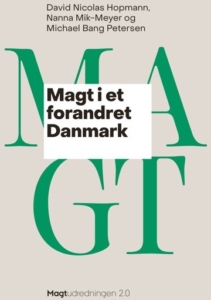
Power in a Changing Denmark explores four different types of power – decision-making power, agenda-setting power, definitional power, and structural power – that help us to understand society and politics in the 21st century.